
Managing email accounts via Windows Plesk (your Control Panel) allows you to add or remove mailboxes without needing a support ticket. This guide will show you how you can safely and effectively create or delete an email account via Plesk for your email hosting with 1-grid.
- What Is an Email Account in Windows Plesk?
- When to Create vs When to Delete
- What Deletion Means and the Risks
- Quotas, Passwords and Permissions
- How to Create an Email Account in Plesk
- How to Delete an Email Account in Plesk
- Configure or Reconfigure Your Email Client After Creation/Deletion
- Best Practices and Maintaining Email Hygiene
- Troubleshooting Common Plesk Email Account Issues
- FAQs
- Additional Resources
What Is an Email Account in Windows Plesk?
An email account (like [email protected]) stores messages for your domain under your hosting package. Plesk makes email management easy, from allowing users to create and delete an email account via Plesk, and manage email accounts, to setting up redirects and auto-responders.
When to Create vs When to Delete
- Create when you need a new user email, alias, departmental address, or temporary mailbox.
- Delete when an email account is no longer needed, compromised, or unused.
IMPORTANT: Be cautious when deleting; this will remove all email data from that mailbox. Be sure that you have backed up any files you need to before doing so.
What Deletion Means and the Risks
- Deleting removes all existing email content for that account; backup first if needed.
- Forwarders or aliases tied to that address may break.
- If someone still has that address configured in their client, they may get bounce errors or errors sending.
Quotas, Passwords and Permissions
- Mailboxes can have storage quotas. It is important to note that when exceeded, you won’t receive new mail.
- Use strong, unique passwords and change them periodically.
- Optionally, restrict mailbox features (Webmail only, no external access) via Plesk settings.
How to Create an Email Account in Plesk
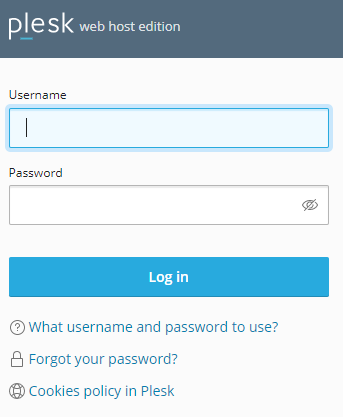
1. Log in to Windows Plesk via your 1-grid Customer Zone.
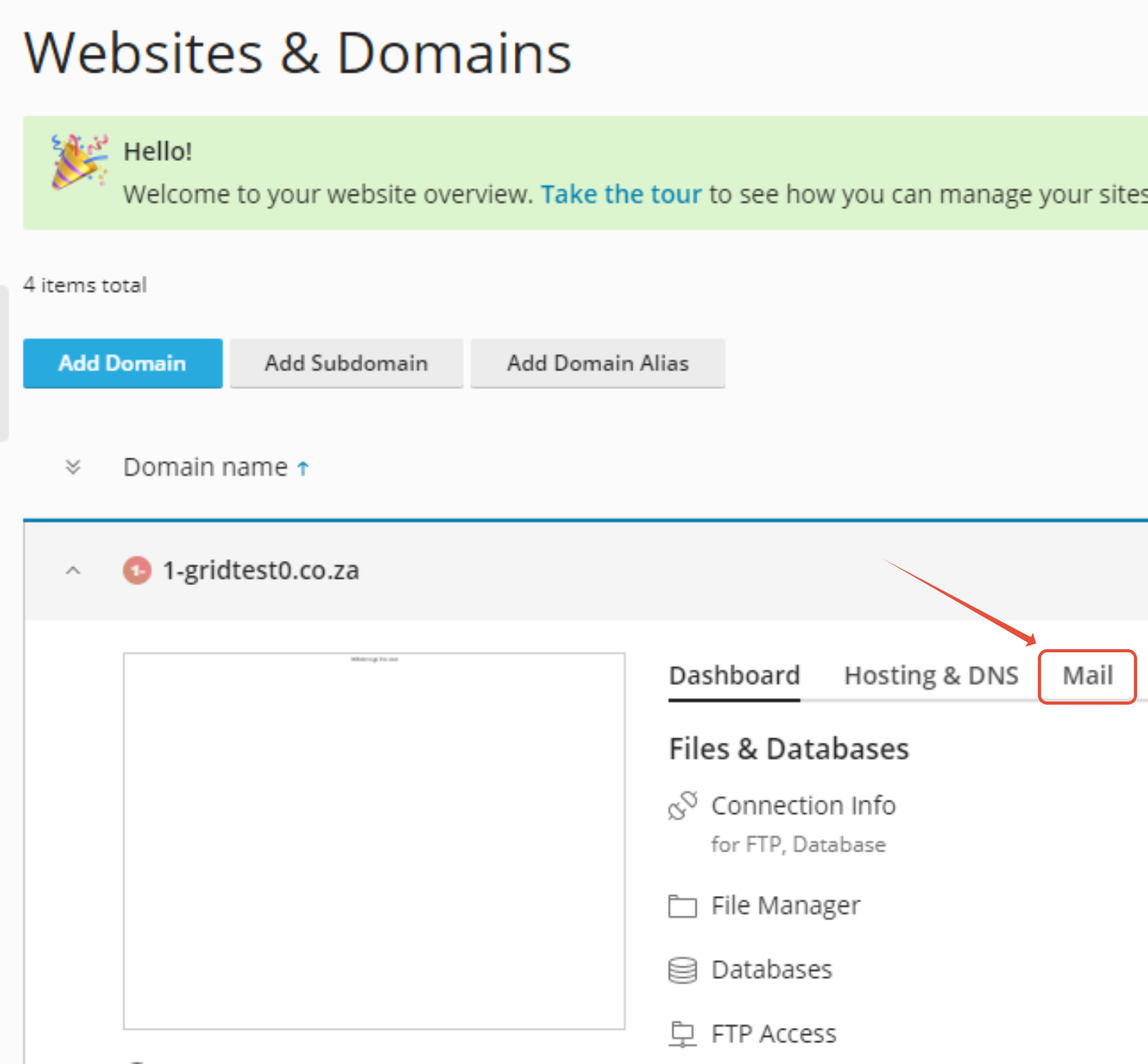
2. Click on Mail.
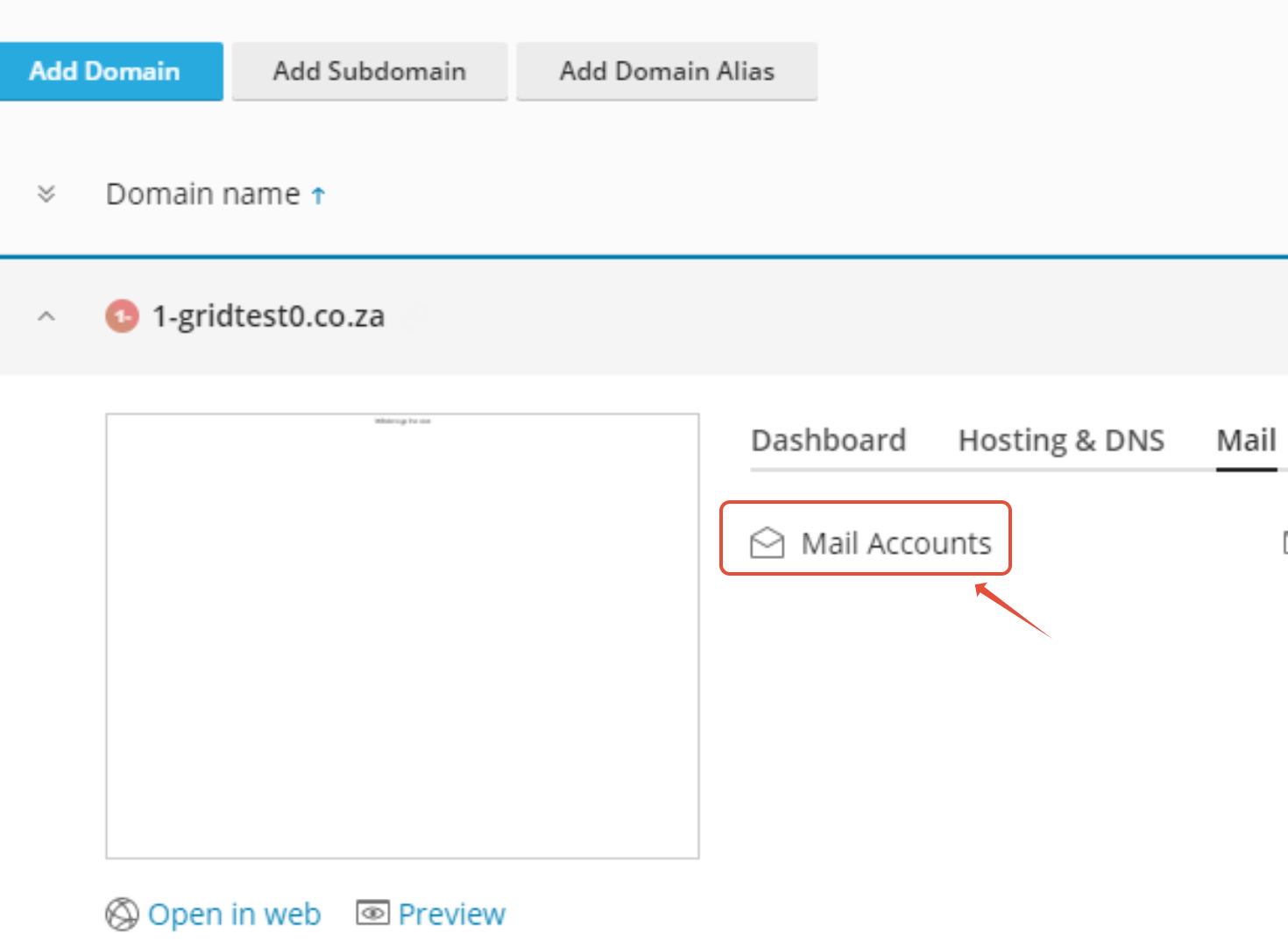
3. Click on Mail Accounts.
4. Click on +Create Email Address.
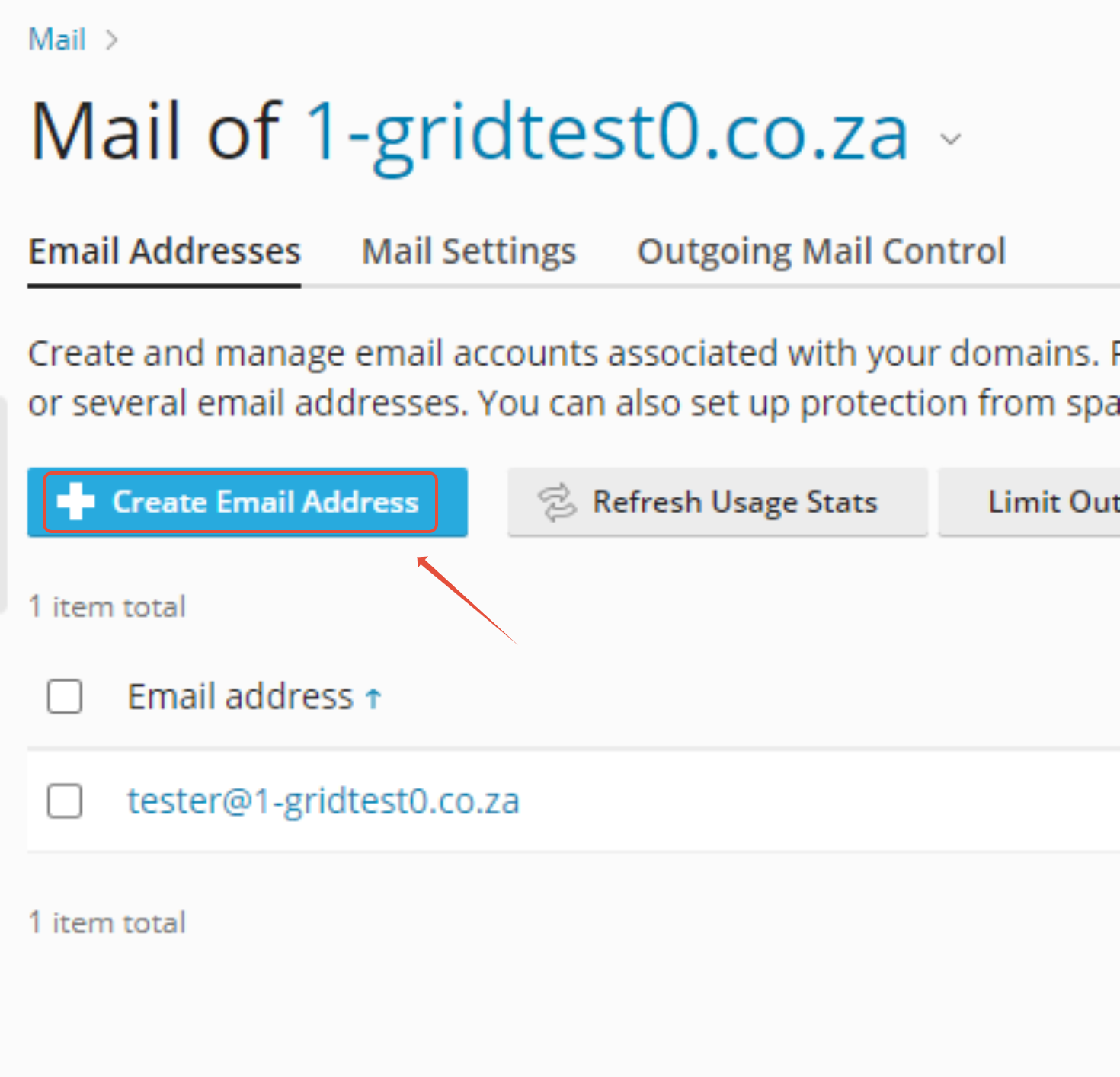
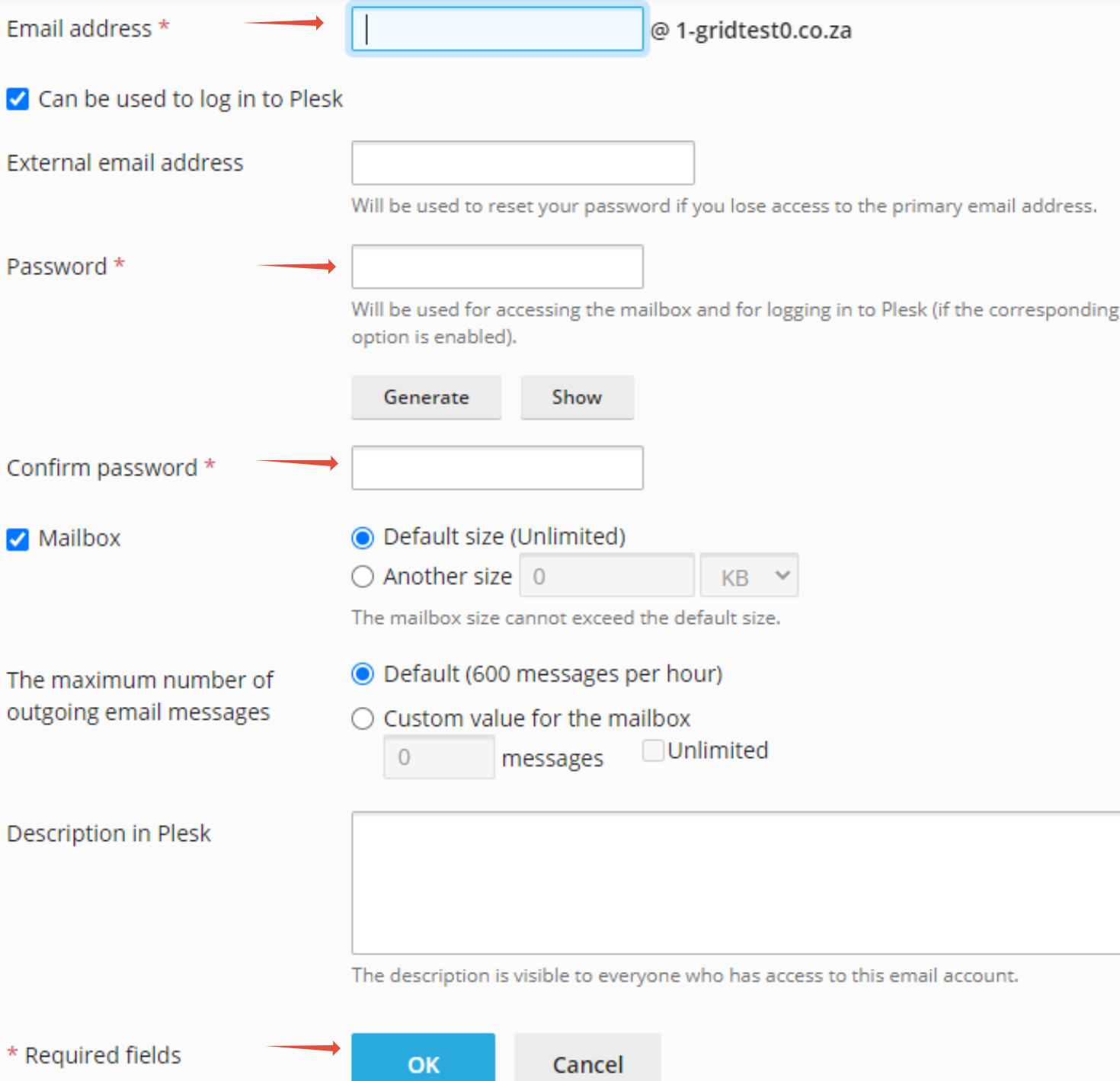
5. Fill in the necessary details and click OK.
- Email address (the part before the @)
- Password
- Confirm password (strong, unique)
- Mailbox Quota (set a size limit or unlimited)
6. (Optional) Set up Email Forwarders or Autoresponders if needed.
IMPORTANT: Note the mailbox settings, like the server, ports, and encryption, so that you can configure any email clients.
How to Delete an Email Account in Plesk
1. Log in to Plesk: Access your Plesk control panel by navigating to the appropriate login URL.
2. Select the domain: Locate the domain for which you want to delete the email account.
3. Navigate to Mail: Click on the Mail or Mail Accounts tab from the left-hand navigation menu or within the domain’s settings.
4. Select the email address: In the list of email accounts, find the one you want to delete and tick the checkbox next to it.
5. Initiate deletion: Click the Remove button.
6. Confirm the deletion: A confirmation window will appear. Click Yes to permanently delete the email account.
IMPORTANT: Inform any user using that mailbox of the deletion to avoid confusion.
Configure or Reconfigure Your Email Client After Creation/Deletion
Once created, you often need to configure Outlook, mobile, or Webmail to access the account. Use the correct server settings, ports, and security details.
You can get set up right away by following our guide: Settings to Configure Your 1-grid Email Accounts Across Devices.
If you have deleted an account via Plesk, be sure to take the necessary steps for the mail client to ensure that these are removed/reconfigured, as needed.
Best Practices and Maintaining Email Hygiene
- Clean up unused mailboxes regularly.
- Use aliases or group addresses rather than multiple full mailboxes.
- Monitor quotas to prevent interruption.
- Enforce strong passwords and periodically audit accounts.
- Document who manages which mailbox to avoid orphaned accounts.
Troubleshooting Common Plesk Email Account Issues
Error “username already exists”
This means that you might have created a mailbox earlier; delete or reuse it.
Login Failed After Creation
Wait a few minutes for synchronisation, re-enter password.
Mailbox Exceeds Quota
Increase the quota or archive older mail. This may also require you to purchase a larger Hosting package.
Client Can’t Connect
Missing Domain
Ensure that your domain is correctly added for hosting before creating the mailbox.
FAQs
Will creating a mailbox automatically configure it for Outlook / mobile?
No, after creation, you’ll need to set it up in your email client using the correct server settings.
What happens to stored emails when I delete the mailbox?
All data stored in that mailbox is deleted permanently. This is why it is recommended to back up messages before deleting them if needed.
Can I change the email password later?
Yes, in Plesk, you can change your email password without needing to delete the email account.
Can I set the email quota to “unlimited”?
Yes, but still monitor the storage usage as very large mailboxes can slow performance or exceed your hosting plan limits.
Can I create catch-all or alias addresses instead of full mailboxes?
Yes, Plesk supports Email Forwarders and Aliases, which allows mail routing without a full mailbox.
If I delete an account, can I recreate it and still get old emails?
Only if you have a backup of the mailbox data (PST/backup), because the server won’t retain deleted content after deletion.
Additional Resources
Windows Plesk FAQs
Settings to Configure Your 1-grid Email Accounts Across Devices
How to Set Up Email on Android for Your 1-grid Email Accounts
Setting Up Email in Outlook via Windows Control Panel
Troubleshooting Steps for Email
Email Error Messages: What Do They Mean and How to Fix Them
Top 10 Common Email Issues and How to Resolve Them
How to Import PST Contacts to Office 365
How to Import a PST File into Outlook
Restoring Emails in Outlook Using a .pst File
How to Repair Your Outlook (PST/OST) Data File
What Is Email Spoofing? How It Works and How to Protect Yourself
How to Spot a Scam Email
Email Headers FAQs
Email FAQs
How to Enable DKIM and SPF on Your Mail Domain
Why SSL? The Purpose of Using SSL Certificates
Understanding DNS, Record Types and Propagation
How to Update Your Domain’s Nameservers at 1-grid
MailChannels FAQs
SpamTitan FAQs
Need Additional Support?
We’re Here to Help:
Creating or deleting an email account via Plesk doesn’t have to feel like a challenge with this easy-to-use guide. Stuck? Contact our Support Team for clarity and guidance (https://1grid.co.za/contact-us/). We’re ready to see how we can help!