
Website security can feel overwhelming, especially when browsers show warnings; certificates expire unexpectedly, or industry standards change without much notice.
This is where SSL/TLS certificates become a foundational part of a secure, trustworthy website. They protect your visitors’ information, confirm your website’s identity, and help ensure your site is recognised as safe by modern browsers and search engines.
At 1-grid, our goal is not just to inform you but to help you feel confident, supported, and empowered to make the right security decisions for your website and your customers.
This guide will clearly explain what SSL/TLS certificates are, in simple, non-technical language, help you understand why SSL/TLS matters even if you don’t take online payments, show you how to check whether your website is secure, explain the different types of SSL/TLS certificates and which one is right for your website, prepare you for upcoming SSL/TLS lifecycle changes, and give you clear next steps to keep your website trusted, protected, and online.
- What Is An SSL/TLS Certificate and Why Does It Matter?
- SSL vs TLS: What’s the Difference?
- How SSL/TLS Protects Your Website
- How to Tell If Your Website Is Secure
- What Happens if a Website is Not Secure?
- Types of SSL/TLS Certificates We Offer at 1-grid
- Trusted SSL Brands We Offer
- IMPORTANT: SSL/TLS Certificate Lifecycle Changes
- Our Scope of Support
- FAQs
- Additional Resources
What Is An SSL/TLS Certificate and Why Does It Matter?
An SSL/TLS certificate protects your website and your visitors by encrypting information as it moves between a browser and your server.
It keeps private information private and proves to visitors that your website is trustworthy.
Without SSL/TLS protection, data such as contact form submissions, login details, and payment information can be exposed or intercepted. Modern browsers now actively warn users when a site is not secure, which can lead to lost trust, lost traffic, and lost revenue.
It protects customer data, builds instant trust, prevents browser security warnings, and supports SEO and search visibility.
SSL vs TLS: What’s the Difference?
You may still hear the term SSL, but modern websites use TLS (Transport Layer Security).
- SSL is the older name
- TLS is the current, more secure standard
Today, “SSL certificate” is commonly used as an umbrella term, but all trusted certificates now operate using TLS encryption.
IMPORTANT: If your certificate is active and trusted, you don’t need to worry about the terminology because your protection is still valid.
How SSL/TLS Protects Your Website
SSL/TLS works by:
- Encrypting information before it travels across the internet
- Preventing third parties from reading or altering that data
- Confirming your website’s identity to visitors and browsers
This protection applies even if your site doesn’t process payments.
IMPORTANT: If your site has forms, logins, admin panels, or collects any personal data, then SSL/TLS is essential.
How to Tell If Your Website Is Secure
Your website is secured when:
- The URL begins with https://
- A padlock icon appears in the browser address bar
Modern browsers such as Google Chrome and Mozilla Firefox will warn users if a site is not secure, even if no payment information is involved.
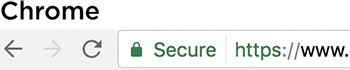

IMPORTANT: A missing padlock doesn’t always mean a site is dangerous, but it can cause hesitation and loss of trust.
What Happens if a Website is Not Secure?
If your SSL/TLS certificate is missing, expired, or untrusted, visitors may see warnings such as:
- “Your connection is not private”
- “This site may be unsafe”
Critical Impacts may include, but are not limited to:
- Visitors leave immediately
- Forms stop converting
- SEO visibility suffers
- Support tickets increase
TIP: Installing and maintaining a valid SSL/TLS certificate resolves these warnings immediately in most cases.
Types of SSL/TLS Certificates We Offer at 1-grid
We do not offer Let’s Encrypt, which is why we intentionally provide paid SSL certificates to ensure reliability, support, and long-term trust. Our goal isn’t just to provide these, but to help you choose the right level of protection for your website, your customers, and your peace of mind.
Not all websites have the same security needs, and that’s okay. Whether you’re running a personal site, a growing business, or managing multiple subdomains, the right SSL/TLS certificate depends on what you need to protect and how much assurance your customers expect.
Below is a clear, human-centred breakdown of the SSL/TLS certificate types we offer, so you can make a confident, informed choice.
Domain Validation (DV) SSL
These types of SSL certificates are best used for personal websites, blogs, small business sites, and landing pages.
Domain Validation (DV) SSL certificates provide the fastest and simplest way to secure your website. They confirm that you own or control the domain name without requiring business documentation, which allows the certificate to be issued quickly.
Why Customers Choose DV SSL
- Fast activation with minimal setup
- Encrypts data between your website and visitors
- Removes browser “Not Secure” warnings
- Ideal for sites that don’t collect sensitive customer data
This option offers essential encryption while keeping things easy and affordable.
Extended Validation (EV) SSL
These types of SSL certificates are best used for established businesses, eCommerce stores, and customer-facing brands.
Extended Validation (EV) SSL certificates offer the highest level of trust and verification. In addition to domain ownership, your organisation undergoes a thorough validation process to confirm its legal identity.
Why Customers Choose EV SSL
- Provides the strongest trust signal for visitors
- Displays verified organisation details in the certificate information
- Helps reassure customers when submitting personal or payment details
- Ideal for brands where credibility and trust are critical
EV SSL helps businesses actively demonstrate legitimacy and professionalism, giving visitors immediate visual confidence online.
Wildcard DV SSL
These types of SSL certificates are best used for websites with multiple subdomains.
Simply put, Wildcard Domain Validation SSL certificates secure your main domain and all its subdomains under a single certificate, making them a cost-effective and scalable solution.
For example, one Wildcard certificate can secure:
- example.co.za
- shop.example.co.za
- mail.example.co.za
- blog.example.co.za
Why Customers Choose Wildcard SSL
- One certificate protects unlimited subdomains
- Simplifies certificate management
- Cost-effective for growing websites
- Quick validation process
In this case, this option is ideal if your website is expanding or already includes multiple subdomains.
Trusted SSL Brands We Offer
We partner with trusted certificate authorities recognised worldwide to provide strong security and broad browser compatibility, ensuring peace of mind.
Notably, Sectigo certificates are valued for their strong encryption, affordability, and flexibility, making them a popular choice for both individuals and businesses.
Available Options
Thawte is a globally respected certificate authority, trusted for enterprise-grade security and reliability, especially for business and commercial websites.
Available Options
IMPORTANT: SSL/TLS Certificate Lifecycle Changes
The SSL/TLS industry is moving toward shorter certificate lifespans to improve overall internet security.
What’s Changing (from March 12, 2026)?
- Certificates will be valid for ~6 months (199 days) instead of 1 year
- Domain Control Validation (DCV) reuse periods will shorten
- More frequent re-issuance is required
These changes are being driven by global security standards set by bodies such as the CA/B Forum and implemented by Certificate Authorities, including Sectigo and DigiCert.
IMPORTANT: You can still purchase multi-year SSL products; during the term, we automatically reissue certificates to keep your protection uninterrupted.
Our Scope of Support
If you’re stuck and need any additional guidance or support, here’s an outline of what we can do and what is not within our Scope of Support.
What We Can Help With
- Choosing the right SSL certificate
- Installation and activation
- Renewals and reissuance guidance
- Troubleshooting browser warnings
- Verifying certificate status
What We Are Unable to Assist With
- Modifying browser behaviour
- Overriding global certificate policies
- Supporting unsupported certificate providers
FAQs
Q: Do I need SSL if my site doesn’t take payments?
Yes, we highly recommend this for any site that collects information or wants to build trust.
Q: Why does my certificate expire more often now?
Industry security standards are moving toward shorter lifespans for safety.
Q: Will my site go down if I don’t renew it?
Your site stays online, but visitors may see security warnings.
Q: Why don’t you offer Let’s Encrypt?
We focus on paid certificates for stability, support, and predictable lifecycle management.
Additional Resources
1-grid SSL Product Page
EverythingYou Need to Know About SSLs at 1-grid
SSL: What Type of Certificate Do I Need?
Why Doesn’t the Green Lock Show?
Browser Recognition and SSL Certificates
Why SSL Matters
Why Is My SSL Certificate Untrusted?
Need Additional Support?
We’re Here to Help:
Understanding what SSL/TLS certificates are and why this matters doesn’t have to cause concerns with this easy-to-reference guide. Stuck? Check out our Scope of Support, and then contact our Support Team for further clarity and guidance (https://1grid.co.za/contact-us/). We’re ready to see how we can help!